Islamic studies curriculum for kids
A mother sat across from me at a school open night and listed everything her son was studying.
He was nine. Quran with a local teacher three times a week. Arabic on Saturdays. Sunday school at the masjid for Islamic studies. And an online hifz program on top of all that.
I looked at the list and asked, “How much of it is connected?”
She tilted her head. “What do you mean?”
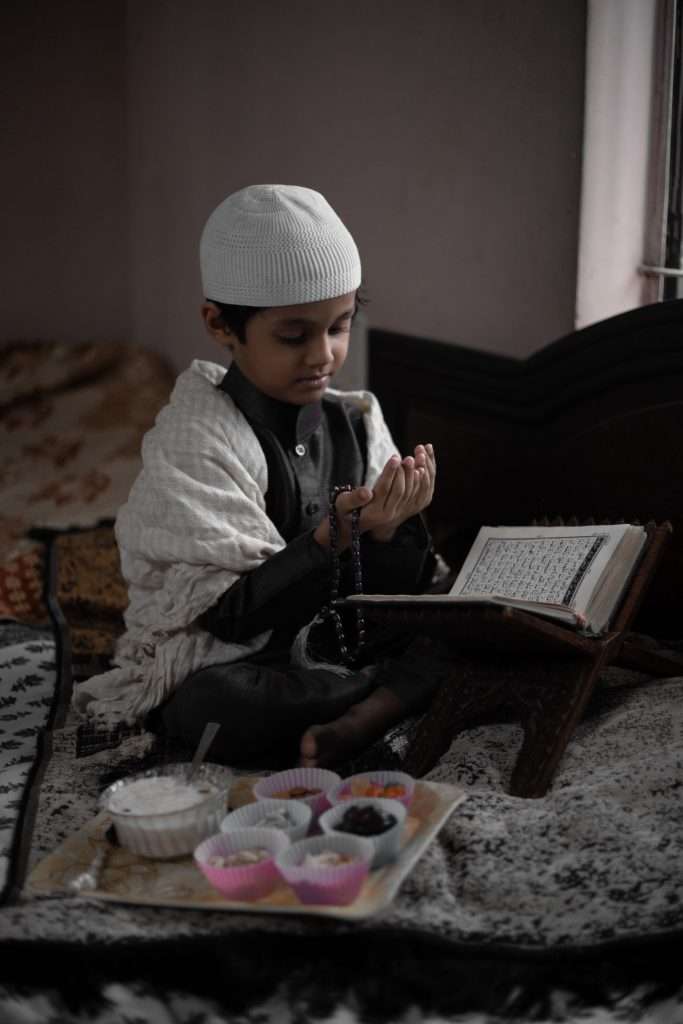
“Does what he learns in Islamic studies tie into what he reads in Quran? Does the Arabic help him understand either one? Does any of his teachers know what the others are teaching?”
She went quiet for a second. Then: “No. Each one is completely separate. He doesn’t know what his teachers know about each other. Honestly, I’m not sure they know either.”
That is the norm for most Muslim kids who get their Islamic education outside a full time Islamic school. Several providers, several formats, no shared curriculum and no sequence. Knowledge ends up in separate compartments instead of building into one understanding of the religion.
It isn’t the parents’ fault. Real Islamic studies curricula designed for children are hard to find, so families piece together whatever is available nearby.
So here is what a proper curriculum for children has to contain, why the pieces need to connect, and what Studio Arabiya offers for families who want their child’s Islamic education to hang together.
What “Islamic studies” actually covers
The phrase is so broad it can mean almost anything. A program that only teaches which foods are halal and haram has technically covered some Islamic studies. So has one that stops at the five pillars. Neither is enough.
A complete curriculum for children covers four areas, and if one is missing, the gap will show up eventually.
Aqeedah
Aqeedah comes first. This is what Muslims believe about Allah, the angels, the books, the messengers, the Last Day and divine decree. It isn’t background reading. Everything else in Islam is understood through it. A child with weak aqeedah is doing the actions without being able to say what they rest on, or defend it when someone challenges it.
Fiqh
Fiqh is the practical side: wudu, salah, the rules of fasting, the conditions of zakat, and how to live as a Muslim day to day. Fiqh without aqeedah gives you rule following with no understanding. Aqeedah without fiqh gives you belief with no practice. They have to be taught together.
Seerah
Then there is seerah, the life of the Prophet Muhammad ﷺ. I don’t mean it as a biography of a historical figure. It is what Islam looks like when a human being actually lives it. Every principle a child meets in aqeedah and fiqh was lived out by the Prophet ﷺ in specific, documented circumstances, and knowing those circumstances gives the principles some flesh.
Du’a and manners
The fourth area is du’a and manners. The supplications for particular occasions. How to eat, greet people, enter the home, treat parents and respect elders. People tend to treat these as extras, but they aren’t. They’re the curriculum showing up in real life, and they’re how a child carries what they learned into an ordinary Tuesday morning.
Studio Arabiya’s Islamic Studies for Kids covers all four. Scholars from Al-Azhar and Cairo University created it, and it follows the path of Ahl al-Sunnah wal-Jama’ah so the content is authentic, accurate and suited to the child’s age. The core themes are Fiqh, Quran, Hadith and Seerah, taught through interactive lessons, quizzes and activities meant to build real love and understanding of the faith.
Leaving out an area matters. Cover aqeedah but not fiqh, or seerah but not du’a, and you get a child who is only partly formed, and who runs into the gaps at exactly the wrong moment.
Why the pieces have to connect
The mother at the open night described something more serious than it sounds.
When aqeedah is taught apart from seerah, kids learn what to believe but never see it lived by a real person. When fiqh is taught apart from aqeedah, they follow rules without knowing why the rules exist or who they’re worshipping by following them. When Arabic is taught apart from Quran and Islamic studies, they pick up language skills that float free of the reason they’re learning the language at all.
Connection is what turns scattered information into an understanding of a religion.
Say a child is learning about wudu in fiqh. In Quran class they’re reciting the ayah about purity. In the hadith portion of Islamic studies they learn that the Prophet ﷺ called purity half of faith. That child isn’t learning three things. They’re learning one thing from three directions, and each direction props up the others. They remember more and understand more.
A teacher who sees across all the subjects can also do something a single subject teacher can’t. Suppose a child asks in seerah why the Prophet ﷺ prayed at night until his feet swelled. A teacher who also knows what that child is covering in aqeedah can link the question to shukr and ihsan. One subject opens a window onto another. You can’t teach that way when everything is split up.
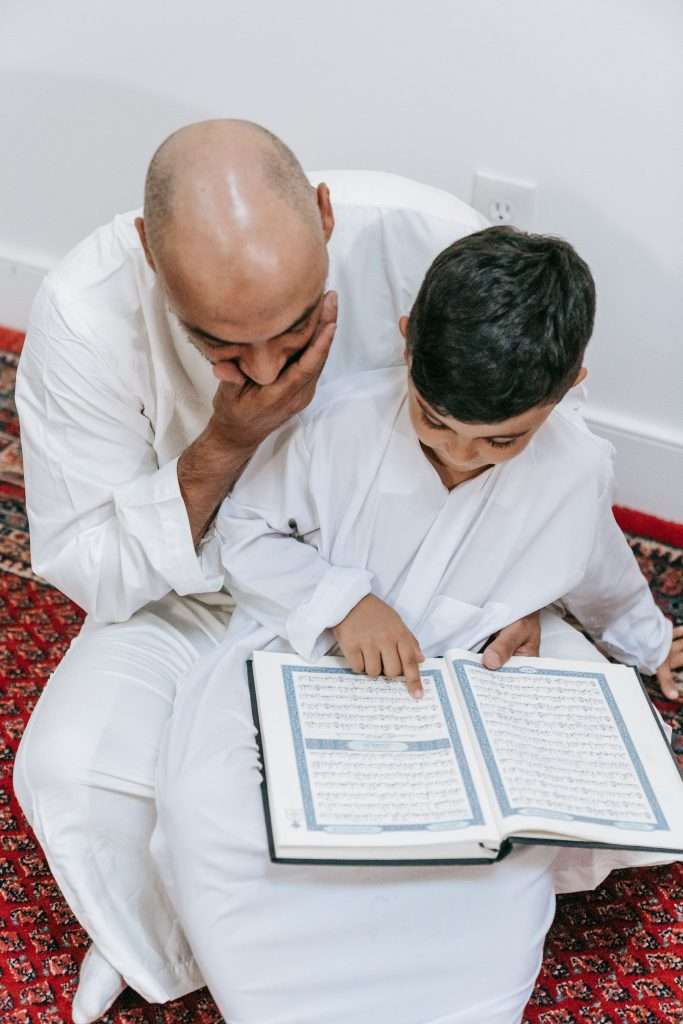
Ustadha Farida has taught Islamic studies to children from six to fourteen for more than eleven years. This is what she told me about the difference: “The integrated children ask different questions. They start connecting things themselves. They say, is this what we were talking about in aqeedah? Is this the Prophet we learned about last week? They aren’t storing facts in separate drawers. They’re building one understanding. The fragmented children sometimes know more individual facts. But they can’t use them. They can’t answer ‘why,’ or ‘how does this connect.’ The knowledge just sits there. It doesn’t grow.”
Who is actually teaching?
A curriculum is only as good as the person delivering it.
The best designed Islamic studies curriculum gets limited results from an unqualified or checked out teacher. And a very knowledgeable teacher who improvises everything gives you some brilliant sessions that never build toward anything.
You need both, and they need each other.
For Islamic studies, qualification isn’t only about Islamic knowledge. It’s about pedagogy too: turning real scholarship into something an eight year old can follow, enjoy and remember. A scholar who can’t speak to an eight year old in words an eight year old understands is the wrong teacher for that child, however deep their knowledge. And a warm, fun teacher without solid Islamic grounding is the wrong teacher for this subject, however much the child likes the sessions.
Genuine scholarship plus real skill with children is rare. It’s also what decides whether a child comes out with real Islamic knowledge and real Islamic character.
Studio Arabiya’s Islamic studies teachers are certified by Al-Azhar University in Egypt, one of the oldest and most authoritative Sunni institutions in the world. They’re also trained to teach children through live, one on one lessons. That pairing is what separates a Studio Arabiya session from a well meaning but unqualified alternative.
There’s a practical side to this. Some parents enroll a child in a program that calls itself “Sunni” without checking what that means, who teaches it, or what their credentials are. That decision has real theological consequences, and aqeedah is the place where small deviations from the Sunni mainstream can slip into a child’s mind without a parent ever noticing.
Al-Azhar certification means the content is rooted in the scholarly tradition of Ahl al-Sunnah wal-Jama’ah. That isn’t a line on a résumé. For a child’s aqeedah, it’s the protection that counts most.
How Studio Arabiya’s programs work
For families who want connected, Al-Azhar certified Islamic studies taught online by a qualified teacher, there are a few formats.
The Islamic Studies for Kids Full Track is the core program, open to children from age four. It covers aqeedah, fiqh, seerah, and du’a and manners in a structured sequence that matches the child’s level. Lessons are live and one on one with a certified teacher, with interactive parts, quizzes and activities for the child’s age. Corrections happen right away, questions get answered in the moment, and the child builds a personal relationship with the teacher that a group class can’t offer.
One on one isn’t just convenient here, it teaches better. A child who can interrupt with “why,” who can say “this doesn’t make sense,” and who gets an answer pitched to their level instead of the group’s average, learns differently from a child who can’t do any of that.
The Online Islamic School K-12 runs the full school year. It’s for families who want daily Islamic education online with the depth and continuity of a real school: Arabic, Quran and Islamic studies five days a week. The Islamic studies part covers the four areas in a graduated sequence that builds year after year, and parents can follow their child’s progress through an online portal. Studio Arabiya describes it as a consistent, interactive program with live daily classes and full online access to each student’s progress.
The Sunday School Program is built for weekend learning. Each Sunday has a two hour live session covering Quran, Arabic and Islamic studies. If your child is in a secular school all week and weekends are the main window for Islamic education, this gives you the structure, curriculum and teacher quality that most weekend schools can’t. Any child or teen who needs a structured weekend course to learn all three subjects in a connected way can join.
The Summer Program deals with a problem a lot of parents overlook, the summer gap. Kids who made real progress during the school year often slide backwards over the summer because their Islamic education simply stops. This program runs five days a week for eight weeks, with daily 45 minute sessions in Arabic, Quran and Islamic studies, so children keep their momentum, and their confidence and love for learning, while school is out.
The Quran and Arabic piece
An Islamic studies curriculum that leaves out Quran and Arabic has no foundation.
The Quran is the primary source. Every topic in aqeedah, fiqh and seerah goes back to specific ayahs and surahs. Teaching a child Islamic studies without the Quran is like describing a house they never get to walk into.
Arabic is the key to that house. A child who can read and understand even basic Quranic Arabic approaches the Quran differently from one who only meets it through translation. The understanding is different, and so is the relationship.
All of Studio Arabiya’s children’s programs combine Quran and Arabic with Islamic studies: the Full Track, the Online School K-12, the Sunday School and the Summer Program. The curriculum is designed so that what a child learns in one subject supports the other two.
Back to the mother with four separate programs. The question isn’t whether any one of them is good. Each might be. The question is whether what her son learns is building toward something coherent, and whether he’ll reach adolescence with a real understanding of his religion or with a pile of facts in separate boxes.
That coherence is what a connected curriculum gives you, and it’s what a parent is choosing when they choose Studio Arabiya.
Umm Yasir moved her daughter from a patchwork of separate providers to Studio Arabiya’s full track two years ago. She told me: “Within three months I noticed something different. She started using what she learned. She’d connect something from Islamic studies to a surah she had just memorized. She’d ask a fiqh question and then answer it herself by going back to what she knew about aqeedah. She wasn’t retrieving facts. She was thinking Islamically. That never happened with the separate programs. The integration was what made the difference.”
Conclusion
That’s what any Islamic studies curriculum for children should be after. Not a child who can pass a quiz, but one who thinks Islamically, whose religion shapes how they see and deal with the world instead of sitting in a box labeled “Islamic studies.”
You get that child from a curriculum that is coherent, well grounded, taught by qualified people, and delivered consistently.
Bismillah. Choose the curriculum that builds the whole child.